
By Eneojo Herbert Idakwo
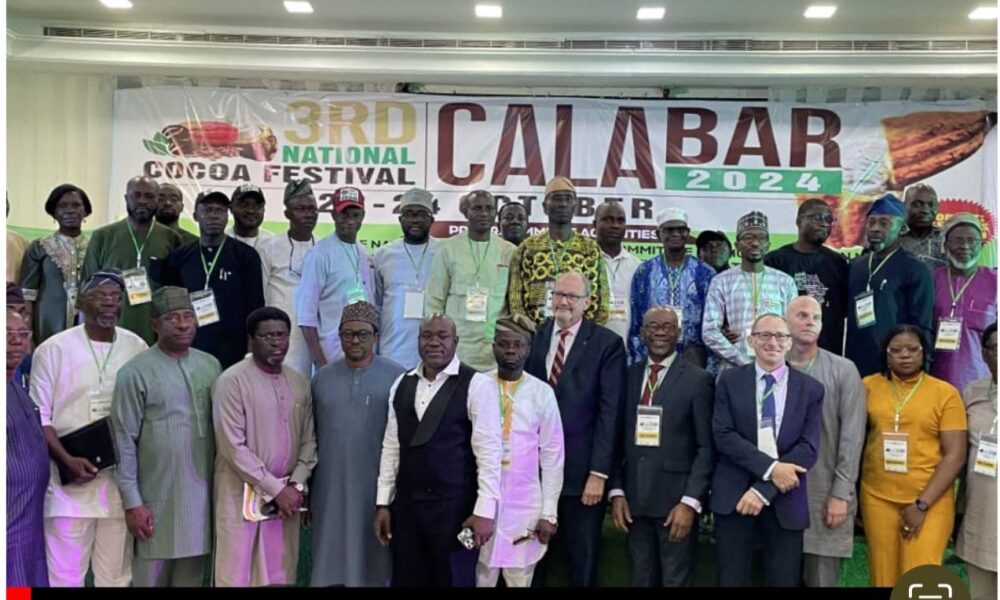
In a bid to redefine its cocoa sector, Nigeria is embracing sustainability, youth engagement, and international compliance. The recent 3rd National Cocoa Festival in Calabar, led by the Cocoa Farmers Association of Nigeria (CFAN) and the Cocoa Roundtable Initiative (CORI), served as a dynamic forum where stakeholders rallied to address these issues, particularly the industry’s alignment with the European Union’s Deforestation Regulations (EUDR).
Hosted at the Metropolitan Hotel, the two-day festival, themed “Calabar 2024: Roles of the National Cocoa Management Committee in Mobilizing Stakeholders into EUDR Compliance and Cocoa Value Addition through Youth Entrepreneurship,” brought together over 300 participants, including policymakers, industry leaders, and farmers. The gathering highlighted Nigeria’s commitment to sustainable cocoa production, regional economic growth, and enhanced youth involvement in the industry.
Tackling Compliance and Sustainability
Nigeria’s cocoa industry, a key player in the nation’s economy, is under pressure to align with the EUDR, which mandates rigorous deforestation controls for imported agricultural products. CFAN and CORI took the lead in assembling stakeholders to chart a way forward, focusing on aligning Nigeria’s practices with the EUDR while encouraging local processing and value addition.
A communique issued at the festival by Mr. Kazeem Sanni, chairman of the drafting committee from the Rainforest Alliance, underscored pivotal action points, including the updating of forest cover and land-use maps across cocoa-producing regions. This step is aimed at strengthening traceability and ensuring transparency, both essential for compliance with EU regulations.
Mobilizing Youth for Cocoa’s Future
With Nigeria’s youth unemployment on the rise, the festival emphasized the potential for young people to lead a new, dynamic chapter for Nigeria’s cocoa industry. The communique underscored the importance of engaging youth in entrepreneurial roles within the cocoa value chain, from production to chocolate and soap manufacturing, and even the emerging market of cocoa-based wellness products. To further facilitate youth involvement, the festival called on the government and agencies to collaborate with the Cocoa Research Institute of Nigeria in creating specialized training and business platforms for young entrepreneurs.
Key Recommendations to Drive Change
The festival’s communique outlined a robust action plan, urging both public and private sectors to bolster local cocoa processing and consumption. Recommendations included:
- Enhanced Local Processing: By focusing on domestic processing, Nigeria can increase the local value of cocoa and create a stronger economic base within cocoa-producing regions.
- Developing a National Cocoa Policy: The communique recommended that the National Cocoa Management Committee (NCMC) drive data standardization across the value chain, culminating in a comprehensive national cocoa policy.
- Awareness and Education: It called for increased awareness campaigns on EUDR compliance and removal of adulterated agrochemicals, ensuring stakeholders understand the importance of sustainable and safe practices.
- Sustainable Farming Practices: Advocating for agroforestry and climate-smart agricultural practices, the communique emphasized adopting sustainability initiatives that would benefit both the environment and farmers’ livelihoods. Training programs on safe agrochemical handling and crop diversification were also highlighted.
- Improved Infrastructure: Recognizing the need for infrastructural support, stakeholders called for investment in roads, storage facilities, and distribution networks within cocoa-growing regions to enhance efficiency in cocoa processing and distribution.
- Land Tenure Reform: The festival brought attention to the need for updated land tenure systems to secure farmers’ rights, a significant step in fostering long-term investment in cocoa production.
- National Traceability System: Establishing a robust national traceability system was emphasized to support transparency, compliance, and Nigeria’s competitive edge on the global stage.
- Exchange Rate Stabilization: To counter the fluctuating naira, the communique urged the government to implement policies that simplify farmers’ access to foreign exchange for essential imports.
Building Strategic Alliances for Cocoa’s Global Stand
International collaboration was also at the forefront of discussions. The communique urged the NCMC to establish partnerships with leading cocoa-producing nations to facilitate knowledge exchange and growth. Such alliances are expected to open doors for innovative practices, especially in climate-resilient agriculture and sustainability.
The festival concluded with a rallying call for unified efforts to propel Nigeria’s cocoa sector toward long-term growth and resilience. “With strong political support, industry collaboration, and a commitment to sustainability, Nigeria can build a globally competitive cocoa industry,” the communique asserted.
The 3rd National Cocoa Festival set the tone for a transformative journey—one that positions Nigeria not only as a top cocoa producer but also as a sustainable, youth-powered leader in the global cocoa market. As the nation forges ahead, the focus remains clear: innovation, compliance, and opportunity, ensuring a vibrant future for Nigerian cocoa.